
There’s been a seismic shift in the digital marketplace. It was in the first couple of years of the 2020s that everyone scrambled to go online, and the 2026s are all about the “Agentic Commerce” where the AI agent, voice search, and hyper-personalised experience will determine the sale. Making the right selection of a partner for your monetary system is not just about web-based tools; it’s about choosing a partner who can help you scale, automate, and integrate your financial operations effectively.
In E2E Accounting, we’ve looked at the benefits of a suitable platform for bookkeeping, VAT and inventory. If you’re looking for the best ecommerce platform for startups in 2026, then you have come to the right spot!
If you’ve already chosen your platform and need help getting started, refer to our blog: How to Start an Ecommerce Business in the UK – 2026 Ultimate Guide.
Key Factors to Consider When Choosing an eCommerce Platform for Startups in 2026
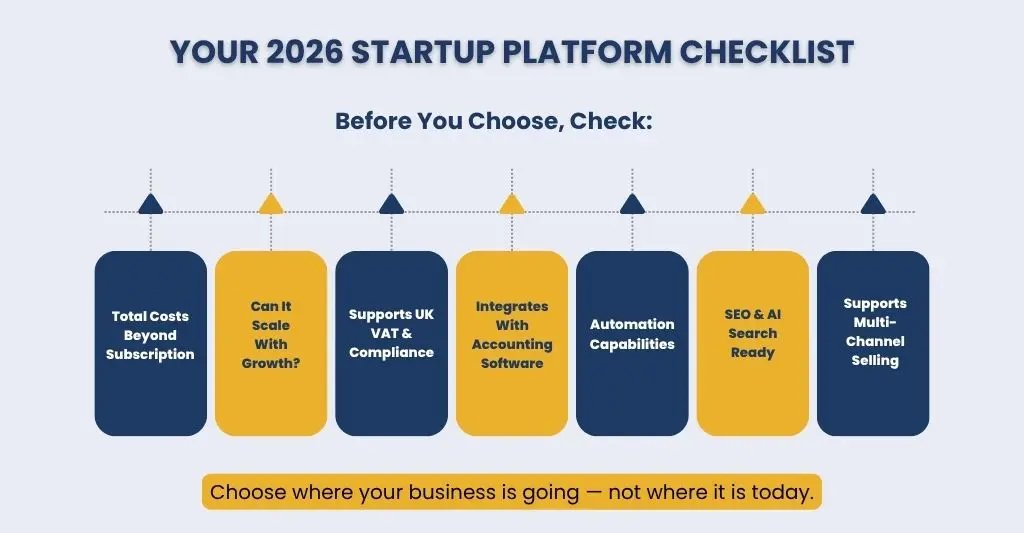
In 2026, the criteria for “best” have evolved. Agility and integration are crucial factors in addition to price and usability for startups. But if the solution doesn’t communicate with your accounting system or properly handle the UK VAT regulations for eCommerce on day 1, it can become a nightmare “technical debt” on day 365.
Total Cost of Ownership (TCO)
Startups often fall for the “monthly price” trap. Beyond the subscription, you must account for:
- Transaction fees: Some platforms penalise you for using third-party payment gateways.
- App/Plugin costs: Basic features on some platforms require paid monthly add-ons. In 2026, many “standard” AI features will come with extra monthly usage costs.
- Maintenance: Open-source platforms will charge you for hosting, security updates, and manual backups.
Scalability and Automation
Can the platform handle a 500% surge in traffic during a seasonal sale? Does it automate your “Invoice to Ledger” process? If you are running a business in the UK, it’s essential that your platform can connect with ecommerce accounting software such as Xero or QuickBooks, and this is a must if you want your books to be clean and Making Tax Digital (MTD) compliant.
Integrated Marketing and SEO Tools
With AI-powered search results increasingly dominating the digital landscape, your ecommerce platform needs more than just a basic “meta tag” field. From an organic visibility perspective, choosing the right ecommerce platform for startups is now less about traditional SEO alone and more about how well the platform supports Answer Engine Optimisation (AEO), structured data, and AI-driven search visibility.
Your site must have a platform that:
- Generates lightning-fast mobile pages (Core Web Vitals).
- Automatically creating “rich snippets” for product reviews and pricing.
- Providing AI-driven keyword suggestions that will be based on real-time UK market trends.
Top Picks for eCommerce Platforms for Startups in 2026
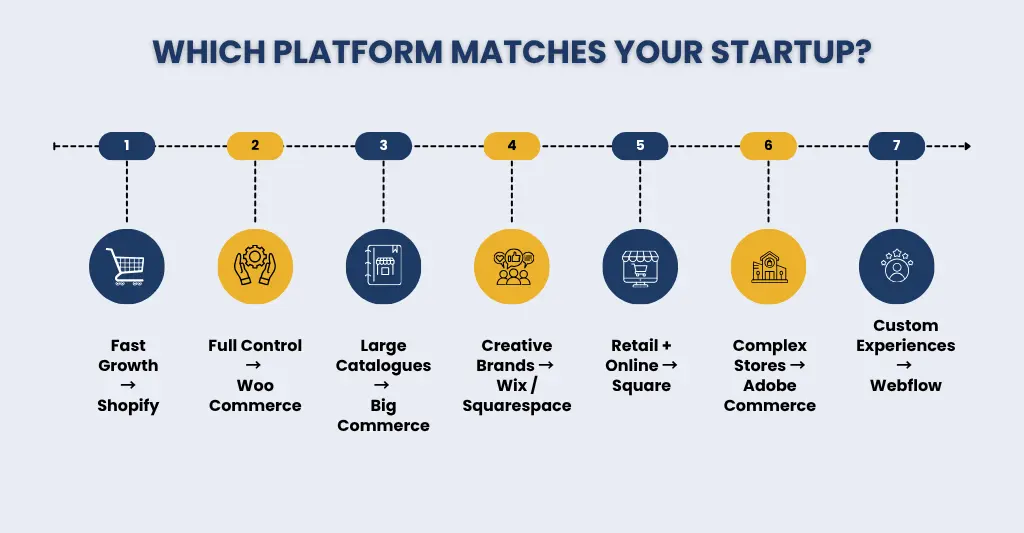
The 2026 scorecard will reveal clear leaders, each serving a different type of startup founder looking for the best ecommerce platform for startups.
#1. Shopify: The “Velocity King”
Shopify has remained the gold standard for D2C startups wanting to launch quickly.
- Pros: Shopify is extremely user-friendly, boasts world-class mobile themes, and has an extensive app ecosystem. Its “Shopify Tax” module is now very advanced in managing complex UK VAT situations, and is a popular choice for UK accountants.
- Cons: The drawbacks include a tendency to “app creep”, rising monthly costs, and being tied to Shopify’s ecosystem
- Best for: It is recommended for founders who prefer to concentrate on marketing and branding, instead of server management. Remember to partner with the best Sophify accountant to reap exponential financial gains.
#2. WooCommerce: The “Ownership Play”
Built on WordPress, WooCommerce powers a huge chunk of the internet and offers the ultimate freedom.
- Pros: Unrivalled flexibility. You own every line of code. Regarding SEO advantages, WooCommerce often takes the crown for technical SEO because of plugins like Yoast and the ability to customise your site’s architecture deeply.
- Cons: You are the IT manager. You must manage hosting, security, and updates yourself.
- Best for: WooCommerce is best for startups with a technical co-founder looking for total control over their data and long-term costs. Here, you need to partner with specialist WooCommerce experts to gain maximum flexibility and scalability.
#3. BigCommerce: The “B2B Workhorse”
With a significant number of startups entering the B2B space, BigCommerce has gained significant ground in 2026.
- Pros: With BigCommerce, you’ll have a few more “out of the box” features than with Shopify, which will reduce monthly app fees. It is very useful when you have a complex product catalogue or when you have several stores.
- Cons: BigCommerce is slightly more complex to become proficient with than Shopify and Wix.
- Best for: Suitable for wholesalers or businesses that plan to sell their products in large numbers (eBay, Amazon, TikTok Shop).
#4. Wix Studio: The “Design Challenger”
The 2026 Wix Studio features more powerful logic and AI-driven design capabilities, comparable to those of professional agencies.
- Pros: Wix Studio has the most user-friendly drag-and-drop experience. Micro startups can use it at affordable prices.
- Cons: It can be difficult to transfer your company from Wix when your business grows.
- Best for: Wix Studio is ideal for creative-driven brands where content is a major component of the sales funnel.
#5. Square Online: The “Brick-and-Click Saviour”
For startups operating simultaneously across physical pop-ups, local retail, and online channels, Square Online bridges the gap flawlessly.
- Pros: Genuinely excellent free entry tier with zero subscription overhead. The real-time synchronisation between in-person Square POS sales and digital inventory effortlessly prevents overselling errors.
- Cons: Design options are structural and blocky. The platform completely lacks the deep aesthetic flexibility of Wix or the immense app marketplace of Shopify.
- Best for: The platform is apt for local retail startups, boutique fashion brands with pop-up stores, and food/beverage setups looking for local pickup options.
#6. Adobe Commerce (Magento): The “Enterprise Blueprint”
The self-hosted open-source version of Adobe Commerce represents the highest level of scalability forscalability for startups launching with serious capital.
- Pros: Limitless database capacity and true multi-store management. It handles infinite product variants, complex localised currencies, and tiered wholesale pricing architectures natively.
- Cons: Highly complex and expensive. Development builds require deep technical agency talent, and poor optimisation leads to sluggish site performance.
- Best for: Heavily funded startups launching vast multi-country marketplaces or complex, high-sku industrial catalogues.
#7. Squarespace: The “Visual Minimalist”
Squarespace platform is renowned for its sleek, professional, and visually breathtaking templates that are tailored for design-forward founders.
- Pros: It has significantly good aesthetic layouts that do not require coding skills. It has great built-in blogging, e-mail marketing, and scheduling options, which don’t require third-party plugins.
- Cons: Inventory and tax tools are fairly simple. The platform does not perform well for complex wholesale architectures or large international catalogues.
- Best for: It is suitable for creative startups, art galleries, lifestyle brands, and service-based businesses selling curated, low-SKU physical products.
#8. Webflow: The “Visual Engineering Marvel”
Webflow also introduces untouched layout design control via the browser, ensuring custom development needs without code burden.
- Pros: There is complete control over HTML, CSS, and animations. It produces clean, highly responsive, semantic code, providing super-fast browsing speeds from the start. It is an excellent choice for anyone who wants to learn a new skill.
- Cons: It can be challenging for people who are not familiar with the fundamentals of website design. The native eCommerce capabilities are still under development and are not yet available for high-volume stores without custom integrations.
- Best for: Tech or design-heavy startups who wish to establish a standalone, extremely interactive brand presence on the web.
The Strategic Importance of Platform Choice for Accounting
From a financial perspective, your eCommerce platform is your primary “data entry” point. If that data is messy, your accounting will be messy. At E2E Accounting, we emphasise three critical technical areas:
Payment Gateway Reconciliation
Your platform must clearly distinguish between the “Gross Sale,” the “Shipping Collected,” and the “Transaction Fees” taken by the gateway (like Stripe or PayPal). If your platform only sends a single “Net” figure to your accounting software, you will struggle to claim back transaction fees as a business expense, and your VAT reporting will be inaccurate.
Inventory Accuracy and Valuation
If you’re a startup business that sells physical products, stock is your most valuable asset. The best platforms provide inventory in real time across all channels. This way, your year-end stocktake will only take a click of the button and not a week of counting.
Global Sales and VAT
If you are going to be selling from the UK to the EU or US, the platform should automatically manage for IOSS (Import One-Stop Shop) and US Sales Tax thresholds. There are platforms like Shopify and BigCommerce that have integrated tax engines to make international expansion easy.
How to Choose the Right Platform for Your Startup
Choosing a platform is like choosing a physical storefront—you need to know your footfall, your storage needs, and your budget.
| Platform | Ease of Use | Customisation | Monthly Cost | Best For |
| Shopify | Very High | High (via apps) | £19 – £250+ | Scaling fast |
| WooCommerce | Medium | Unlimited | £0 (Excl. Hosting) | Tech control |
| BigCommerce | High | High (Native) | £25 – £300 | B2B / Catalogs |
| Wix Studio | High | High (Visual) | £17 – £100 | Creative Design |
| Square Online | Very High | Basic | £0 – £115 | Brick-and-Mortar |
| Adobe Commerce | Low | Unlimited | £0 (Excl. Agency) | Enterprise Marketplace |
| Squarespace | High | Medium | £15 – £40+ | Low-SKU Minimalist |
| Webflow | Medium-Low | High (Visual) | £29 – £200+ | Interactive Visuals |
The “Accountant’s View”: At E2E Accounting, we believe that the best ecommerce platform for startups is the one that does the least manual data entry. If your platform provides a direct, reliable API connection with your accounting software, you will save about 10+ hours a week on bookkeeping. This is the time you will have to invest in your growth instead of reconciling your bank statements.
Navigating the Post-Launch Phase: Maintenance and Growth
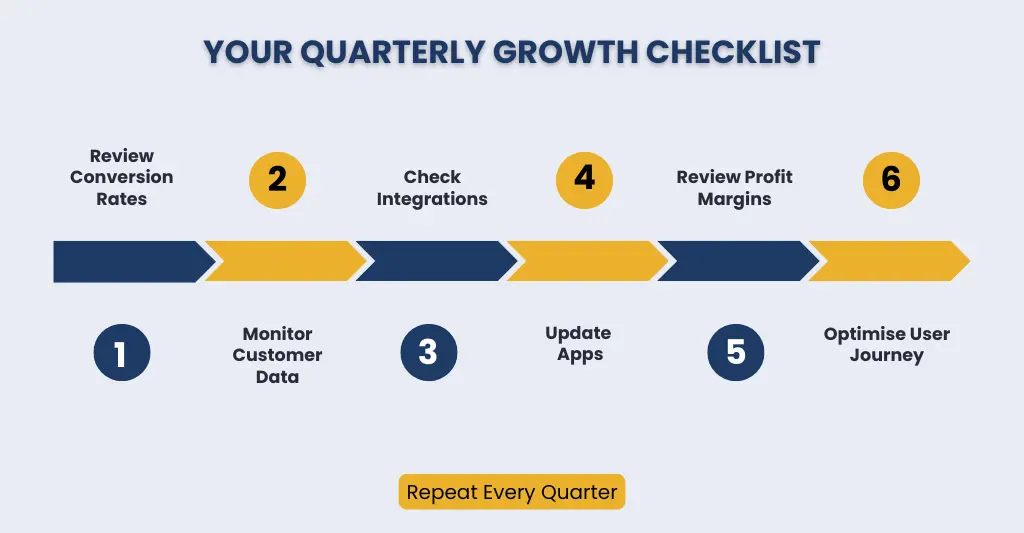
Once you have selected a platform, the work doesn’t stop. In 2026, eCommerce success requires a “Pulse Check” every quarter.
The Conversion Rate Optimisation (CRO) Factor
Your platform should offer robust A/B testing. Any 1% improvement in conversion can make a huge difference for a startup. New platforms in 2026 will have AI making suggestions for “Heatmap” changes, which means it will be able to see where users are clicking and where they’re dropping off.
Customer Data Platforms (CDP)
Data privacy is more stringent than ever. You need to select a platform that is GDPR compliant and has “Zero Party Data” collection tools.
Conclusion
The evolution of ecommerce after COVID-19 has reached a profound level of maturity. It is no longer a time when simply having a website is the only requirement. The landscape of ecommerce after COVID-19 has become exponentially more competitive, highly automated, and strictly dependent on accurate data—and that’s an environment that today’s startups need to navigate.
In this digital age of online shopping, it’s a combination of man and machine that’s rewarded by the market. Regardless of which platform your budget takes you, whether it’s Shopify’s agility or WooCommerce’s technical control or BigCommerce’s robustness, you must have a well-thought-out financial plan to support you.
We are E2E Accounting, and we know how to assist UK eCommerce startups from their initial sale to their initial $1,000,000. We don’t just deal with the VAT and Corporation Tax; we help you develop the financial plan that will make your eCommerce site a money spinner.
I don’t think the first one to be pretty is going to win in 2026; I think the first one who has the most efficient business model is going to win in 2026.
People Also Ask:
What is the Best eCommerce Platform for SEO in 2026?
Technical SEO is generally the most flexible aspect of WooCommerce, as products can be very deeply customised. Shopify and BigCommerce are great platforms for startups; however, technical aspects such as site speed, SSL certificates, mobile optimisation and more are taken care of automatically, which is important for ranking.
Which platform is ideal for startups with a small budget?
Typically, the most affordable are Wix and WooCommerce (if you have your own hosting). But Ecwid also has a wonderful “free” option for companies with only a few goods, that is, to “plug” an online business into an already existing website.
What’s the difference between SaaS and Open-Source eCommerce platforms?
The term SaaS (Software as a Service) is a “rented” space, like Shopify, where the provider takes care of security and hosting. It’s hands-off but more expensive. Open-Source such as WooCommerce is owned by you, but you must handle the technical maintenance, security updates and performance of your hosting.
What are the hidden costs of eCommerce platforms?
Look out for payment processing fees (often a percentage of every sale), premium theme costs, and monthly app subscriptions. On some platforms, these “extra” apps can easily double or triple your expected monthly spend.
Can I migrate my store from one platform to another?
Yes, but it’s complicated and risky. There are tools to move your product data, but you may find that you lose your custom design and suffer a downturn in your SEO ranking for a few days in the process. It is always best—and less expensive—to actually select a scalable platform from the beginning.
What’s the Best eCommerce Platform for startups?
There is no “one size fits all” answer. Shopify is best for speed and ease, WooCommerce for technical control and SEO, and BigCommerce for multi-channel scaling and B2B operations.
Do I need a separate hosting service for my eCommerce store?
Only for platforms such as WooCommerce that are open source. High-performance managed hosting is part of the monthly price for SaaS solutions such as Shopify, BigCommerce, and Wix, thus reducing tech stack complexity.
