

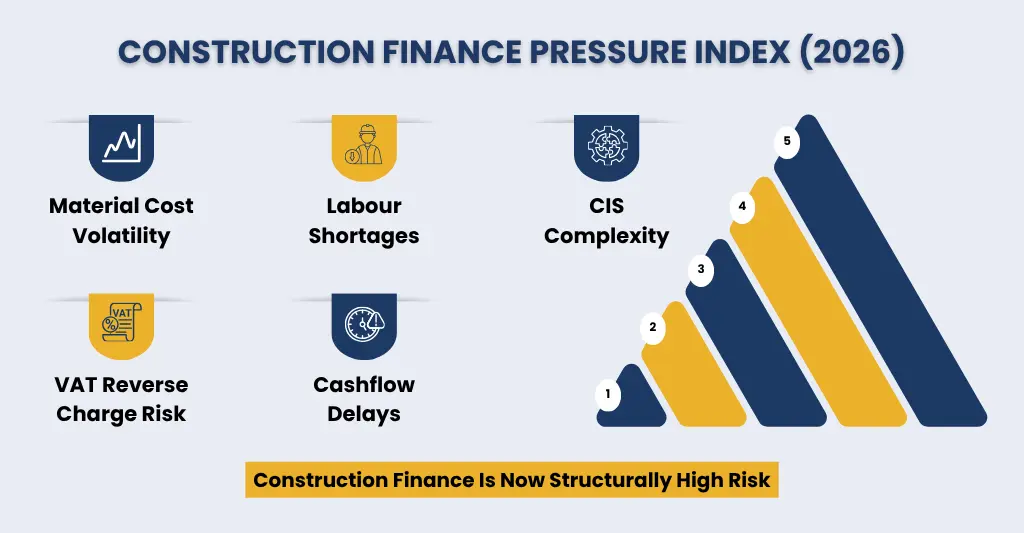
In the high-stakes world of the UK construction industry, you are well aware that the strength of your business isn’t just measured by the physical structures you erect but by the financial foundation upon which they stand. As we navigate the complexities of 2026, the landscape for builders, contractors, and project managers has become increasingly intricate. Between fluctuating material costs, evolving labour laws, and the relentless march of HMRC’s digital tax initiatives, the margin for error has never been thinner.
You need more than a traditional bookkeeper; you need a specialist. Choosing the right construction accountants can be the difference between a project that yields a healthy profit and one that becomes a financial sinkhole. This comprehensive guide is designed to empower you with the knowledge to select best construction accountants in UK partner – who understands the unique pulse of your industry—from the nuances of the Construction Industry Scheme (CIS) to the strategic management of VAT and cashflow.
How to Shortlist the Right Accounting Firm for Your Construction Business
When you begin the process of shortlisting construction accountants, it is easy to be overwhelmed by the sheer volume of firms claiming to offer specialist services. However, the construction sector is not a place for generalists. You need a firm that is not only familiar with the fundamentals of accounting but also has an understanding of the construction company’s unique needs.
To create your shortlist, you should look for several key indicators:
- Direct Industry Experience: Does the company have a history of experience with builders and contractors? It would be wise to request their:
- experience in handling complex CIS disputes
- experience in managing the VAT aspects of large-scale residential/commercial projects.
- Technological Maturity: Manual entry is a thing of the past. Shortlist companies that are knowledgeable about
- cloud-based platforms, such as Xero, Sage or QuickBooks,
- Integration skills that are specific to the construction industry.
These can help you visualise how you are doing financially, in real time, which is essential for agile decision-making. If you’re unsure what this should look like in practice, our guide on how to do construction accounting breaks down the core processes a modern firm should have in place.
- Communication and Culture: The great accountant should feel like an extension of your team. During your initial consultations, evaluate if they speak your language.
- Are they aware of the distinction between gross and net pay status in terms of CIS?
- Are they aware of the constraints of project deadlines? If it seems awkward, then they’re not for you.
You should treat this shortlisting process as a high-value procurement exercise. The goal is to find a partner who will not only keep you compliant but will actively look for ways to improve your bottom line through better cashflow management and tax efficiency.
What Construction CFOs Actually Look for in Accounting Firms
If you are operating as a construction CFO or a senior financial decision-maker within a firm, your needs are strategic rather than purely administrative. A CFO doesn’t just want to know what happened last quarter; they want to know what is likely to happen in the next three projects.
When you evaluate an accounting firm from a CFO’s perspective, you should prioritise the following:
- Forward-Looking Insights: Prediction Analytics is a requirement. The most effective construction accountants will give forecasts that take into account material price inflation, shortage of labour and project delays. This will give you the chance to tweak your bidding approach before it becomes unprofitable for you.
- Risk Mitigation: Construction is a risky business. From handling the financial threats of an extended supply chain to ensuring CIS and VAT, reverse charge rules are applied correctly, your accountant should be your first line of defence against audits by HMRC and financial leakage.
- Scalability: Your accounting needs will increase as your business grows to bigger and more complicated endeavours. You need a finance team that can grow with your multiple-location construction business, offering greater detail and rich reporting.
- Financing and Bidding Support: A strategic accountant helps you win more work. By providing detailed financial modelling and proof of solvency, they can assist you in securing project financing and navigating the pre-qualification questionnaires (PQQs) required for major contracts.
How We Evaluated These Accounting Firms (Our Transparent Criteria)
To ensure this guide provides you with the highest quality recommendations, we used a rigorous and transparent set of criteria to evaluate the top construction accountants in the UK. We understand that your trust is earned, and our evaluation process reflects the high standards of the industry.
- CIS and VAT Specialisation: We looked for firms that have dedicated departments for the Construction Industry Scheme and the Domestic Reverse Charge for VAT. These are the areas where most construction firms face their greatest compliance risks.
- Project-Based Reporting: We prioritised firms that offer granular reporting. In construction, viewing your finances as a whole is often insufficient; you need to see the profitability of each specific project to identify which sites are performing and which are draining resources.
- Client Success Stories: We reviewed case studies and testimonials from other builders, contractors, and project managers. Real-world performance is the best indicator of future success.
- Technological Integration: We assessed each firm’s ability to implement and manage modern accounting software that provides real-time data access, ensuring you have the information you need, whenever you need it.
Top 10 Construction Accountants in the UK (Who They’re Actually Right For)
Choosing the right firm depends on the specific scale and complexity of your operations. Here is our expert ranking of the best construction accountants for 2026:
#1. E2E Accounting
E2E Accounting is one of the best for construction firms in the UK. They offer a truly “End-to-End” service that is specifically tailored to the needs of modern builders and contractors. What sets them apart is their proactive approach to cashflow and CIS management. If you are looking for a firm that acts as a strategic partner, helping you navigate the complexities of multiple sites while ensuring absolute compliance, E2E Accounting is the clear leader. They are right for you if you value real-time financial clarity and a dedicated team that understands the nuances of the UK construction market.
#2. Coxhinkins
Coxhinkins provides high-level professional services with a strong focus on corporate-scale construction projects. They are an excellent choice for established firms that require traditional accounting excellence paired with a deep understanding of industry-specific tax planning. If your operations require a blend of meticulous audit capability and sector-specific insight, Coxhinkins is a robust second choice for contractors who need high-level financial oversight.
#3. MyIVA
MyIVA is a crucial inclusion for firms that find themselves navigating more complex financial scenarios, such as debt restructuring or specialised recovery within the construction sector. While their focus is slightly more niche, their presence is vital for builders or project managers who may be facing financial headwinds and require expert guidance to protect their business’s future during economic shifts.
#4. Julian Hobbs & Co.
Julian Hobbs & Co. has a long-standing reputation for providing personalised, high-quality accounting services. They are particularly well-suited for medium-sized construction firms where a close, advisory relationship with the lead accountant is preferred. You will find them highly capable of managing the day-to-day requirements of CIS and payroll while offering steady strategic advice.
#5. UK Property Accountants
UK Property Accountants bring a unique perspective by bridging the gap between property development and construction. If your business operates across both sectors, their expertise in tax optimisation for property assets combined with construction-specific accounting is invaluable. They are an ideal choice if you are a developer who also manages your own on-site construction teams.
#6. Azets
As a major player in the UK market, Azets offers the depth of resources typically associated with the “Big Four” but with a more localised, accessible feel. They are right for large multiple-site construction firms that require extensive resources, including international tax advice or complex corporate finance support, without losing the personal touch of a dedicated account manager.
#7. Calathea Accounting Ltd
Calathea Accounting Ltd is a modern, forward-thinking firm that prioritises digital integration and efficiency. They are an excellent fit for younger, tech-savvy construction firms that want to automate as much of their back-office as possible. If you want your financial data to be as mobile as your site teams, Calathea’s cloud-first approach will serve you well.
#8. Expand Accounts
Expand Accounts focuses heavily on growth and scalability. If your ambition is to quickly scale from a local contractor to a regional powerhouse, they provide the management accounting and financial forecasting required to support that journey. They help you understand the financial implications of taking on larger projects before you sign the contract.
#9. Starbridge Accounting
Starbridge Accounting prides itself on clarity and transparency. They are excellent for builders who want to strip away the jargon and understand their numbers clearly. Their straightforward reporting style ensures that you always know your VAT position and cashflow status without having to dig through complex spreadsheets.
#10. Moore Kingston Smith
Moore Kingston Smith offers a high-end consultancy approach to construction accounting. They are best suited for large-scale project managers and infrastructure firms that require sophisticated strategic advice, including mergers and acquisitions support or high-level risk management. Their deep bench of specialists ensures that no financial challenge is too complex for them to handle.
Common Pitfalls Construction Firms Face With Accounting
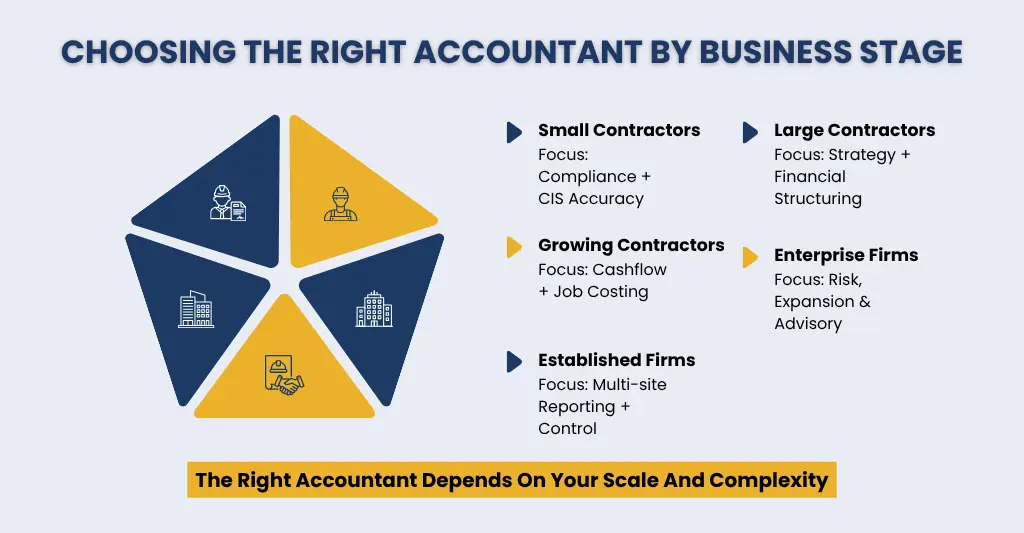
Even with a dedicated team, the construction industry is fraught with financial traps. If you aren’t careful, these common pitfalls can erode your profits and invite unwanted scrutiny from HMRC:
- The “Gross vs. Net” CIS Trap: One of the most common errors is failing to verify a subcontractor’s status correctly before payment. If you pay someone gross when they should have been net, or vice versa, the financial penalties can be staggering.
- Cashflow Cannibalisation: In a multiple-site construction firm, it is easy to use the profits from one project to fund the start-up costs of another. While this seems like efficient use of capital, it can lead to a “house of cards” scenario where one delayed payment from a client causes a domino effect across all your projects.Tight, project-separated bookkeeping for your construction business is what prevents this kind of cross-contamination between sites.
- VAT Misclassification: With the Domestic Reverse Charge, VAT in construction has become significantly more complex. Applying the wrong rate to a project or failing to account for the reverse charge correctly can lead to massive tax liabilities that you might not discover until an audit occurs.
- Poor Revenue Recognition: Construction projects often span long periods. Recognising revenue too early can lead to paying tax on money you haven’t truly “earned” yet, while recognising it too late can make your business look less profitable than it is, affecting your ability to secure financing.
Revenue recognition issues are almost always a WIP problem in disguise. See how WIP accounting prevents this →
Practical Tips for Construction Accounting & Cashflow Management
To stay ahead of the curve, you must be proactive. Here are several practical strategies that you can implement today to improve your financial health:
- Implement “Job Costing” Immediately: Don’t just track your overheads; track every nail, hour of labour, and hire of plant equipment against a specific job code. This is the only way you can truly see your project-specific cashflow.
- Automate Your CIS: Use software that automatically verifies subcontractors with HMRC and generates payment certificates. This reduces human error and ensures you are always compliant.
- Maintain a “Contingency” Cash Reserve: The construction industry is volatile. You should aim to keep a cash reserve that can cover at least three months of operating costs, protecting you from late payments or sudden material price spikes.
- Monthly Strategy Sessions: Don’t wait until the end of the year to talk to your accountant. Have a monthly or quarterly session to review your VAT position, your cashflow forecast, and your project margins. This allows you to course-correct in real-time.
When Construction Businesses Should Consider Switching Accountants
Many builders and contractors stick with the same accountant for years out of habit, even when the service no longer meets their needs. You should consider switching to a specialist firm like E2E Accounting if you notice any of the following:
- Reactive vs. Proactive Advice: If your accountant only tells you what you owe after the deadline has passed, they are not adding value to your business. You need an accountant who warns you of upcoming tax liabilities months in advance.
- Lack of Industry Knowledge: If you find yourself explaining the CIS or the Domestic Reverse Charge for VAT to your accountant, it is time to move on. You are paying for their expertise, not to be their teacher.
Our breakdown of how construction accounting should actually work is a useful benchmark if you want to check whether your current provider is keeping pace.
- Scaling Issues: If your firm is growing into a multiple-site construction firm and your current accountant seems overwhelmed by the increased volume of transactions and complexity, they could become a bottleneck for your growth.
- Technological Lag: If your accountant still insists on paper records or won’t integrate with your on-site management software, they are hindering your efficiency and your access to real-time data.
How E2E Accounting Supports Construction Businesses
E2E Accounting is not just another firm; they are a strategic asset for your business. We have built our reputation on understanding the specific pressures that builders, contractors, and project managers face every day.
We support your business by:
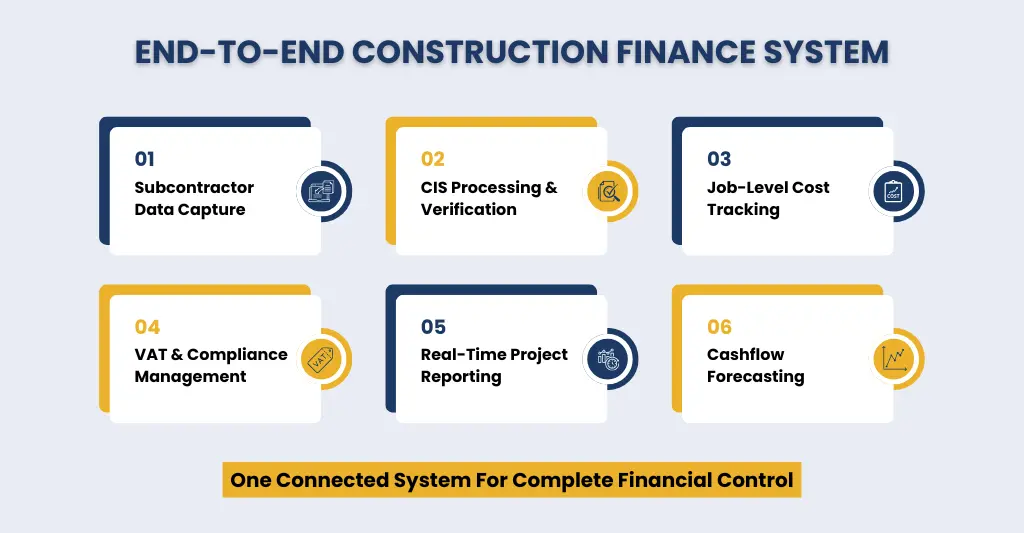
- Seamless CIS Management: From subcontractor verification to monthly returns, we handle every aspect of the Construction Industry Scheme, ensuring you never face a penalty.
- Strategic VAT Advice: We navigate the complexities of the Domestic Reverse Charge, ensuring your VAT filings are accurate and that you are taking advantage of all available recovery opportunities.
- Cashflow Optimisation: By providing real-time visibility into your project-specific finances, we help you manage your working capital more effectively, ensuring you have the funds to pay your crew and buy your materials on time.
- Bidding Support: Our detailed financial reports give you the confidence and the data to bid for larger contracts, knowing exactly what your margins will be.
Conclusion & Next Steps
In 2026, the success of your construction business is tied directly to the quality of your financial management. You have the skills to build incredible structures; make sure you have an accountant with the skills to build an incredible business.
Don’t settle for mediocre accounting that leaves you vulnerable to HMRC or blindsided by cashflow issues. Take the time to evaluate your current situation. Does your current accountant provide the project-level insight you need? Are they proactive about CIS and VAT? If the answer is no, then it is time to make a change.
Your next steps:
- Review your current project margins and cashflow forecasts.
- Identify any areas where you feel your current accounting is lacking.
- Contact a specialist like E2E Accounting for a consultation to see how a dedicated construction expert can transform your business.
People Also Ask:
What makes construction accounting different from standard accounting?
Construction accounting is unique due to the Construction Industry Scheme (CIS), complex VAT rules like the Domestic Reverse Charge, and the necessity of project-based job costing. Unlike standard retail or service accounting, construction requires tracking costs and revenue across long-term contracts and multiple sites simultaneously.
Do I need a construction-specialist accountant if I manage only a few projects?
Yes. Even for small-scale builders or contractors, the compliance requirements for CIS and VAT are the same as they are for larger firms. A single error in a CIS deduction can lead to significant HMRC penalties that could jeopardize a smaller business’s survival.
How do CIS deductions work for subcontractors?
Under the CIS, contractors must deduct a percentage of a subcontractor’s payment (usually 20% for registered or 30% for unregistered subcontractors) and pay it directly to HMRC. This acts as an advance payment towards the subcontractor’s tax and National Insurance. Specialist construction accountants ensure these deductions are calculated and filed accurately every month.
Can a general accountant handle multiple-site construction firms?
While possible, it is not recommended. Multiple-site construction firms face high levels of financial complexity, including cross-site labour allocation and varied VAT treatments. A specialist has the tools and the experience to manage these nuances without the errors a generalist might make.
How do I track project-specific cashflow effectively?
The most effective way is through “Job Costing” in a cloud-based accounting system. By assigning every expense and every penny of revenue to a specific project code, you can generate real-time reports that show the exact liquidity and profitability of each site independently.
When should I switch to a construction specialist accountant?
You should switch as soon as you feel your current accountant is reactive rather than proactive. If your business is scaling, if you are hiring more subcontractors, or if you are moving into multiple-site operations, the need for specialist expertise and management accounts becomes critical to avoid financial leakage.
How can accountants help with VAT claims across projects?
Specialists understand the different VAT rates applicable to new builds, conversions, and renovations. They can ensure you are not overpaying on your purchases and that your Domestic Reverse Charge entries are handled correctly, which is vital for maintaining a healthy cashflow.
What reporting should I expect to manage multiple projects?
You should expect a Monthly Profit & Loss (P&L) per project, a Work-in-Progress (WIP) report, a consolidated cashflow forecast, and an aged creditors/debtors report. This level of detail allows you to see where your money is tied up and where your profits are coming from.
Can a construction accountant advise on bids & project financing?
Absolutely. By providing accurate historic data on your project margins and preparing professional financial statements, a specialist accountant makes your business much more attractive to lenders and helps you bid on contracts with a clear understanding of your “break-even” point.
