
Introducing Tom, a UK-based small business entrepreneur who sells electronics on Amazon. One day, when he logs in, he discovers that his best-selling item is sold out and consumers are complaining about it. Tom acknowledges that his system for monitoring stock is inadequate.
Managing your products effectively is essential if you are a UK seller like Tom. Amazon inventory management is essential to maintaining strong sales, avoiding expensive storage costs, and retaining satisfied consumers – It’s not just a back-office task.
The purpose of this blog is to provide information about practical strategies, tools and best practices to take control of your stock. If you are a small business owner, eCommerce entrepreneur, or an Amazon seller in the UK then this guide will help you to keep your customers happy and boost business growth.
What Is Amazon Inventory Management?
The method of monitoring, arranging, and managing your goods on Amazon is known as Amazon inventory management. It helps reduce storage costs, avoids stockouts and overstocking, and guarantees that you have the correct products accessible at the right time. Additionally, efficient inventory management enhances order fulfillment, maintains customer satisfaction, and boosts sales for your Amazon company.
Why Amazon Inventory Management Is Critical for UK Sellers in 2026
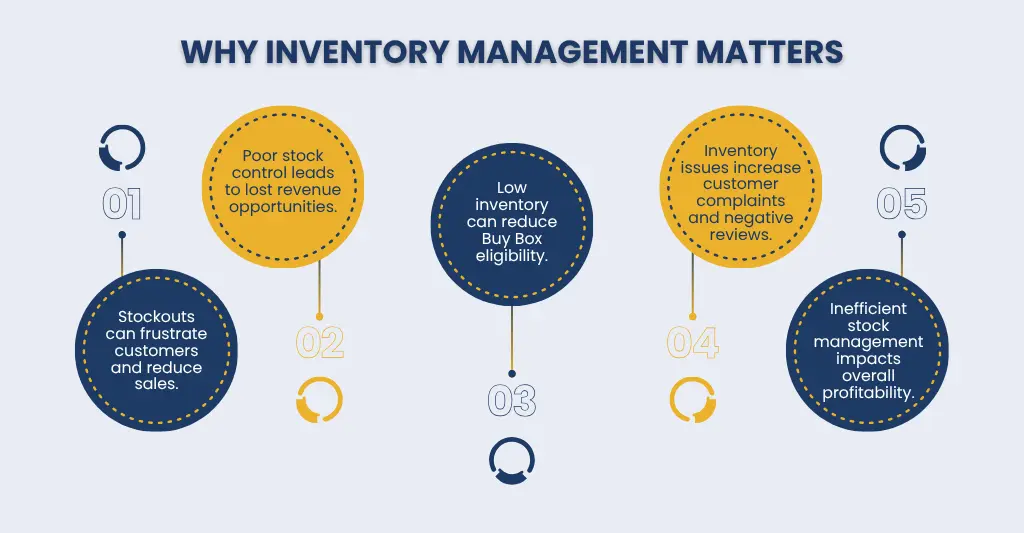
Effective Amazon inventory management is crucial for UK Amazon merchants to succeed in the fiercely competitive market of 2026. Here’s why:
- Prevent Stockouts and Lost Sales: Running out of goods can have a negative impact on your product’s rating in Amazon’s search results, affect your eligibility for the Buy Box, and directly lower revenue.
- Control Storage Costs: Keeping extra inventory can get expensive in 2026 due to an increase in Amazon FBA costs. Maintaining ideal supply levels is ensured by effective inventory management.
- Optimise Cash Flow: In order to free up funds for high-demand products or marketing campaigns, proper tracking keeps money from being blocked up in slow-moving things.
Struggling with Amazon seller cash flow? Read our guide on Amazon seller payouts and common mistakes UK sellers make.
- Meet Customer Expectations: In the highly review-driven market of 2026, prompt and accurate order fulfillment is essential for 5-star reviews and repeat business.
- Adapt to Demand Fluctuations: Real-time inventory tracking is necessary to prevent shortages or overstocking due to seasonal fluctuations, product launches, and shifts in consumer behaviour.
- Leverage Automation and Analytics: Inventory management is now more intelligent and strategic than ever because of modern solutions that enable UK retailers to estimate demand, monitor trends, and automate reorders. This, when paired with monthly management accounts, shows exponential results.
The 5 Core Stock Management Techniques for Amazon Sellers
Effective inventory management on Amazon necessitates strategic approaches that support sellers in maintaining stock levels, cutting expenses, and satisfying customers.
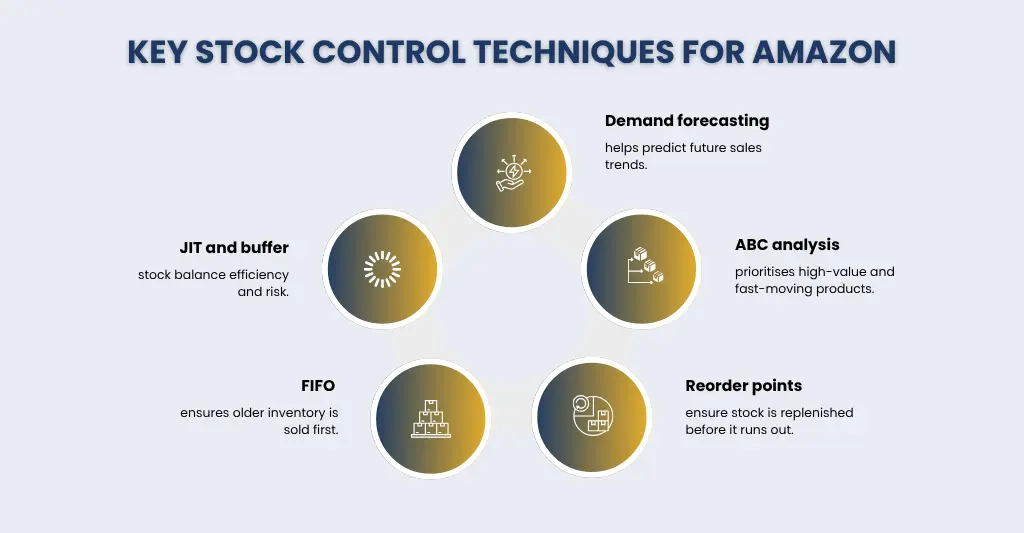
In 2026, every UK Amazon seller should be aware of these five essential stock management techniques:
#1. Demand Forecasting:
Demand forecasting is the process of predicting future product sales using market insights, seasonal trends, and historical data. Accurate forecasting helps you to maintain the proper level of inventory to satisfy consumer demand and prevents stockout or overstocking of goods.
#2. ABC Analysis for SKU Prioritisation:
ABC analysis classifies your products according to their turnover or sales value:
- A items: Expensive, in-demand goods that require careful observation
- B items: Stable demand for moderately priced goods
- C items: Low-cost, low-demand goods that need little maintenance
Sellers can use this strategy to prioritise which SKUs to concentrate on for cash flow management and restocking.
#3. Setting Reorder Points and Safety Stock Levels:
Safety stock acts as a safeguard against unexpected demand or delays, while reorder points specify the stock level at which you should place new orders. Correctly setting these guarantees efficient order fulfillment and avoids stockouts.
#4. FIFO (First In, First Out) Inventory Method:
Selling the oldest inventory first is known as FIFO. For seasonal goods, perishable goods, or products with expiration dates, this technique is necessary. FIFO keeps inventory fresh for customers while lowering the danger of dead stock.
#5. Just-in-Time (JIT) vs. Buffer Stock Strategy:
- Just-in-Time (JIT) ordering lowers storage costs by ordering only what is needed, but it requires accurate forecasting.
- Buffer Stock: Keep excess inventory on hand to deal with supply delays or demand spikes.
How to Optimise Your Amazon Inventory Control – Step by Step
The secret of a successful Amazon business is not just about making great profit; it also requires proper inventory management. Here’s a methodical strategy UK vendors can use in 2026 to maintain precise stock levels, cut expenses, and boost sales:
- Analyse Historical Sales Data: Analyse your prior sales results for each SKU first. Identify trends, seasonal spikes, and slow-moving products to make well-informed stock decisions.
- Categorise Products by Priority: Prioritise high-value or quickly selling SKUs by using strategies like ABC analysis. Don’t overinvest in slow-moving things; instead, concentrate on maintaining these commodities adequately stocked.
- Set Reorder Points and Safety Stock: Set each product’s minimum stock levels. To prevent stockouts, especially for high-demand or seasonal commodities, establish reorder points and keep safety stock on hand.
- Automate Inventory Tracking: Utilise inventory management systems that work with Amazon, such as Seller Central, Restock Pro, or inventory monitoring platforms like Helium 10, to automate reorders, receive low-stock notifications, and keep an eye on stock levels in real time.
Learn how ERP integration improves stock visibility and reporting in our guide to turning Amazon data into actionable business insights.
- Implement FIFO (First In, First Out): Make sure that older stock is sold first, especially when it comes to seasonal or perishable goods. This lowers the possibility of wasted storage costs and dead goods.
- Balance JIT and Buffer Stock: Choose which goods need buffer stock to deal with unexpected demand or shipment delays, and which can be managed using Just-in-Time (JIT) inventory.
- Review and Adjust Regularly: Inventory management is a continuous process. Review stock performance on a weekly or monthly basis, revise projections, and modify reorder levels in response to sales velocity and market trends.
Can I Track My Amazon Inventory Across Multiple Marketplaces?
Yes! UK sellers who operate on multiple Amazon marketplaces such as Amazon.co.uk, Amazon.de, or Amazon.fr, can track their inventory across all platforms. This is necessary to avoid stockouts, overstocking, and overselling.
Here’s how you can manage it effectively in 2026:
- Use Amazon Seller Central: You can keep watch on multi-marketplace inventory from your account, but each marketplace may need attentive human adjustments.
- Example: Tom sells products on multiple Amazon marketplaces using Amazon Seller Central. He tracks inventory from one dashboard, but still needs to manually adjust stock levels and listings for different marketplaces when required.
- Use Third-Party Inventory Management Tools: Real-time stock tracking across several marketplaces, automated reorders, and centralised reporting are all made possible by software such as Sellics or ChannelAdvisor.
- Example: Tom sells on eBay, Shopify, and Amazon UK. He utilise Sellics and ChannelAdvisor to seamlessly sync inventory, track stock in real time, and manage all marketplaces from a single dashboard rather than manually checking stock on each platform.
- Sync Stock Levels Across Marketplaces: In order to avoid overselling and unfavourable ratings, third-party inventory management systems make sure that a sale on one marketplace automatically updates inventories on others.
- Example: Tom has only 5 units of a product left in stock and sells on Amazon UK, Shopify, and eBay. When a customer purchases 1 unit on Amazon, his inventory management system instantly updates the stock level to 4 across Shopify and eBay as well, preventing the same item from being oversold on multiple marketplaces.
- Forecast Demand Per Marketplace: Track sales trends separately to maximise stock allocation because different marketplaces may have different demand patterns.
- Example: During the holidays, Tom observes that there is a greater demand for phone accessories on Amazon, but Shopify sales stay consistent. He increases stock allocation for Amazon in order to prevent stock shortages and maximise sales chances by monitoring marketplace-specific sales trends.
FBA vs. FBM – How Your Fulfilment Method Affects Your Inventory Strategy
The way you handle your inventory is altered by the fulfilment method you select. For UK Amazon merchants, here is a straightforward comparison:
| Feature | Fulfilment by Amazon (FBA) | Fulfilment by Merchant (FBM) |
| Storage | Amazon warehouses; stock sent in advance | Your own warehouse or storage space |
| Packing & Shipping | Handled by Amazon | Handled by you or your team |
| Inventory Control | Must forecast accurately to avoid overstock/understock | More flexible control over stock levels |
| Storage Costs | Monthly fees + long-term storage fees | Depends on your own storage costs |
| Replenishment Planning | Needs regular monitoring of FBA stock levels | You decide when and how much to restock |
| Best For | High demand, fast-selling items | Slow-moving or custom products |
For instance: Tom uses FBA for fast-selling items, where Amazon stores, packs, and transports his inventory. He uses FBM to handle stock, storage, and shipping directly with greater flexibility for slower-moving and specialised products.
Amazon Inventory Management Software Options (Brief Overview)
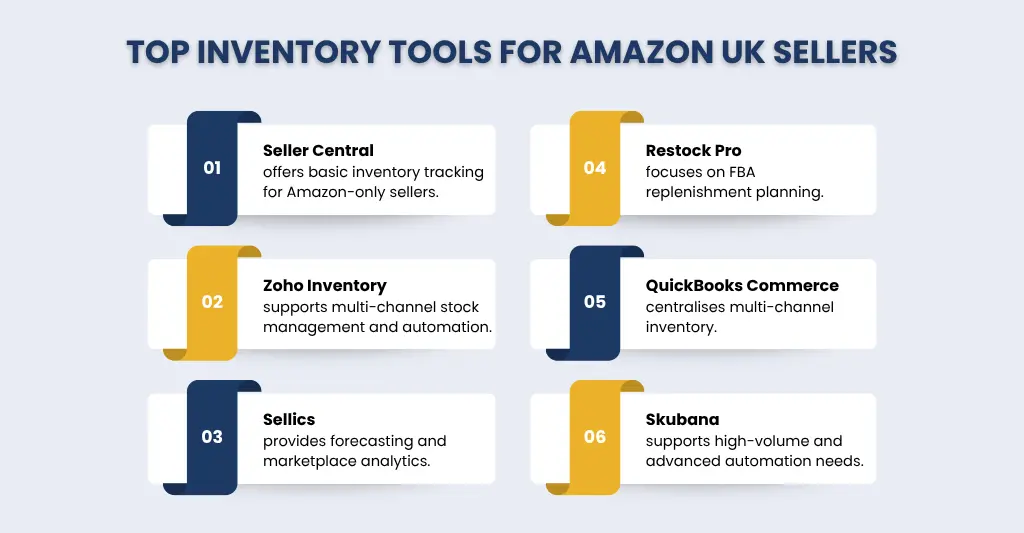
Utilising the right inventory management software can make Amazon inventory management much easier, especially for UK sellers managing multiple SKUs, marketplaces, or fulfilment methods. Here’s a quick comparison of some popular tools that you can use in 2026.
| Software | Key Features | Best For | Pricing UK |
| Seller Central (Amazon) | Built-in inventory tracking, order management, sales reports | Beginners or sellers managing only Amazon | Free with seller account |
| Zoho Inventory | Inventory tracking, order management, warehouse control, and multi-channel syncing | Ideal for small to medium-sized businesses needing scalable inventory management | From £29/month |
| Sellics | Multi-marketplace tracking, automated alerts, stock forecasting | Medium to large sellers needing cross-market insights | From £47/month |
| Restock Pro | Reorder planning, FBA shipment management, SKU tracking | FBA-focused sellers | From £79/month |
| TradeGecko / QuickBooks Commerce | Centralised stock across multiple sales channels, reporting, and order sync | Sellers with multi-channel stores | From £39/month |
| Skubana | Real-time stock sync, demand forecasting, automation | High-volume sellers or those with multiple warehouses | From £199/month |
8 Common Amazon Inventory Management Mistakes to Avoid
Mistakes can happen to anyone, whether you are a new business owner or an experienced one. Some common mistakes can be a severe loss to your business, such as:
- Overordering Stock: Stocking too much goods blocks your cash and increases storage fees. Stock your goods sensibly, forecast consumer choices and demands carefully to avoid overstocking.
- Running Out of Stock: Shortage of stock leads to a drop in sales scale and customer dissatisfaction. Use accurate reorder points and safety stock levels to prevent shortages.
- Poor SKU Organisation: Accurate product tracking is hampered by confusing or inconsistent SKU naming, which can result in mistakes in ordering or reporting.
- Not Tracking Multi-Marketplace Inventory: Selling on multiple Amazon marketplaces without proper management can cause overselling, cancellations, or negative reviews.
- Depending on Manual tracking: Solely depending on manual tracking can make errors. Switch to Amazon inventory management software to avoid errors and save time too.
- Ignoring Data and Analytics: Poor stock decisions and lost income might result from failing to analyse sales trends, slow-moving SKUs, and turnover rates.
The Importance of Expert Support
It can be quite difficult to manage Amazon inventory across several marketplaces, particularly with stockouts, FBA fees, and fluctuating demand. Professional assistance helps ensure accurate tracking, timely replenishment, and efficient order management.
UK merchants can maximise stock levels, prevent expensive mistakes, and boost sales with expert advice. By utilising methods, technologies, and knowledgeable consultants, your inventory will always be in line with demand, enabling your company to grow with confidence.
Why Choose E2E Amazon Accountants
Selecting E2E Amazon Accountants means working with professionals who are aware of the particular difficulties associated with selling on Amazon. We offer precise Amazon bookkeeping, transparent financial reporting, and customised tax planning to help you maximise revenues while maintaining compliance.
Our staff ensures that your inventory, fees, and sales data are always optimised since we are well-versed in FBA, FBM, and multi-marketplace operations.
With committed assistance and customised advice, our Amazon Accountants allow you to concentrate on expanding your company while we effectively manage the finances.
Conclusion
In 2026, UK retailers will need to manage their Amazon inventory effectively to grow, make money, and satisfy customers. Every aspect of inventory management affects your bottom line, from preventing stockouts and managing storage expenses to maximising cash flow and anticipating demand. Sellers can maintain the proper stock levels while lowering expenses and operating stress by putting tried-and-true methods like demand forecasting, ABC analysis, FIFO, and a balanced JIT/buffer stock strategy into practice.
Using professional assistance, like E2E Accounting, guarantees that your stock is correct, your financial reporting is trustworthy, and your company is prepared to grow across several markets.
Looking for specialist support for your Amazon business? Explore our guide to the best Amazon accountants in the UK.
People Also Ask:
What are the best software options for managing Amazon inventory?
With features for stock tracking, forecasting, and multi-marketplace administration, Amazon Seller Central (which has built-in tracking), Sellics, Restock Pro, QuickBooks Commerce (TradeGecko), and Skubana are the top software alternatives for managing Amazon inventory.
Can I track my Amazon inventory across multiple marketplaces?
Using Amazon Seller Central for basic monitoring or third-party solutions like Sellics or ChannelAdvisor, UK sellers can keep track of Amazon inventory across several marketplaces, including Amazon.co.uk, Amazon.de, and Amazon.fr. These systems assist in avoiding overselling, stockouts, and mistakes in all markets by enabling real-time stock updates, automated reorders, and centralised reporting.
How can I optimise my inventory control on Amazon?
– Analyse past sales to forecast demand accurately.
– Set reorder points and maintain safety stock.
– Automate tracking with tools like Restock Pro.
– Use FIFO and balance JIT with buffer stock.
– Review and adjust stock levels regularly.
What is the IPI Score, and how does it affect my Amazon account?
The IPI Score evaluates your FBA inventory management effectiveness. While a low score may limit storage and increase expenses, a high score raises storage limits and reduces prices.
What is the difference between FBA and FBM inventory management?
FBA (Fulfilment by Amazon): Your products are stored, packaged, and shipped by Amazon; to prevent shortages or overstock, you must make precise stock forecasts.
Fulfillment by Merchant, or FBM, gives you more control over inventory but necessitates more work and resources because you manage storage, packing, and shipping.
How much inventory should I send to Amazon FBA?
Sales velocity, demand projections, and storage restrictions determine how much inventory should be sent to Amazon FBA.
– Fast-selling items: To prevent stockouts, keep two to four weeks’ worth of inventory on hand.
– Slow-moving items: To cut down on storage costs, send smaller batches.
To plan the best numbers, use demand forecasting software.
What happens if my Amazon inventory runs out of stock?
If your Amazon inventory runs out of stock:
– Lost Sales: You miss potential revenue until stock is replenished.
– Impact of Buy Box: You may not be eligible for the Buy Box if you run out.
– Lower Ranking: Product visibility may drop in Amazon search results.
– Customer Dissatisfaction: Stockouts can lead to negative reviews and reduced repeat purchases.
What is stranded inventory on Amazon and how do I fix it?
Stranded inventory is FBA stock that is unable to be sold because of listing problems. Correct it by relisting products, fixing mistakes, and correctly connecting ASINs in Seller Central. You can use Helium 10 for this.
