

Managing an eCommerce company’s finances is a difficult task. Balancing cash flow, figuring out profit margins, and keeping up with ever-changing tax rules may leave even the most experienced business owners buried in spreadsheets and questioning their figures. In contrast to traditional companies, eCommerce operations have particular accounting difficulties, including complicated sales tax compliance across states and nations, multi-channel sales reporting, and foreign transactions. One needs to understand the intricate differences between eCommerce and traditional accounting to truly grasp what’s coming.
This is the role of an eCommerce tax accountant. Comprehending the complexities of online transactions, these experts are prepared to assist you in optimising your financial situation, lowering your tax obligations, and guaranteeing adherence to constantly evolving legislation. In this guide, we’ll look at how hiring a skilled eCommerce tax accountant can help you save money, streamline your business, and free up time to concentrate on expanding your company.
Who are eCommerce Tax Accountants?
eCommerce tax accountants are experts in financial reporting, sales tax compliance, and tax management for online companies. They guarantee proper eCommerce bookkeeping, assist with international and multi-state tax regulations, and maximise tax methods to maintain firms’ profitability and compliance.
When Do You Need an eCommerce Tax Accountant?
As your eCommerce business grows, managing taxes and financials can become more complicated. An eCommerce tax accountant can help streamline your finances, ensuring compliance and optimising tax strategy. Here are some key situations where you may need expert help:
- When You Sell Multi-State or International Sales: Managing diverse sales tax regulations when selling in different states or nations is tough. For UK‑based sellers, this can mean staying compliant with EU-UK eCommerce VAT rules, thresholds, and overseas GST/VAT regimes when you cross economic‑nexus thresholds in other countries.
- Your Business is Under Rapid Growth: The complexity of your finances rises as your platforms, orders, or revenue increase.
- You Sell on Multiple Sales Channels: You may require assistance in balancing your earnings and fees if you sell on sites like Etsy, eBay, Shopify, Amazon, etc. This is where eCommerce management reporting becomes crucial, helping owners and MDs make informed decisions.
- Inventory & COGS Tracking: Accurate profit margins, cost of goods sold, and stock level management become challenging.
- Tax Filing & Strategy: To minimise taxes, guarantee proper corporate structure, and stay clear of state and IRS fines – that extra help goes a long way!
- Lack of Time or Expertise: When expanding your business, your full focus should be on growth rather than on keeping track of accounts and taxes.
- Financial Clarity Needed: You may need the extra help of an eCommerce tax accountant to get accurate, clear financial reports for loan applications, investments, and business planning.
Top Strategies to Save More This Tax Season
eCommerce businesses frequently have to manage complicated tax rules, arrange financial records, and identify last-minute deductions as tax season approaches. Smart tax planning, however, aims to maximise savings and position your company for long-term success, not only to meet deadlines.
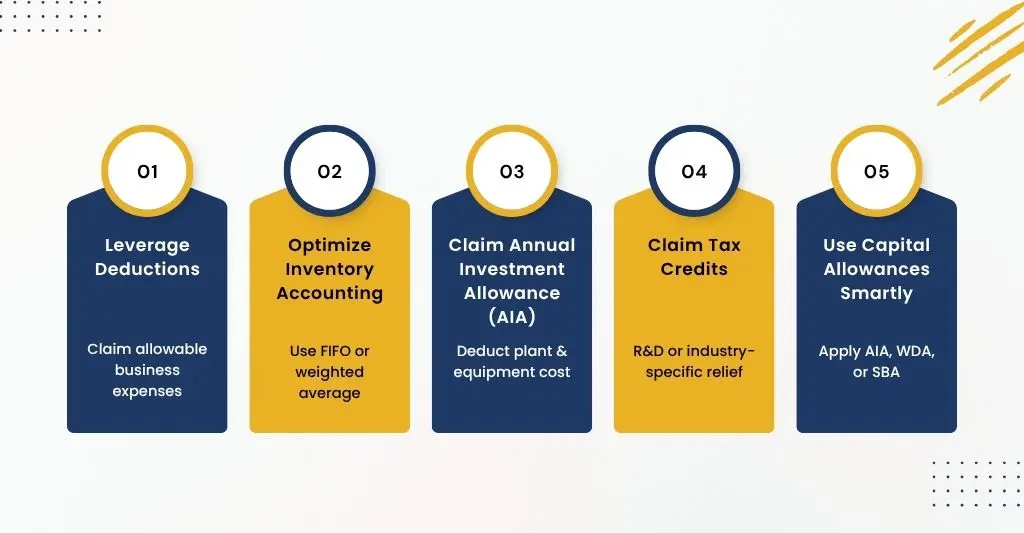
The following are some of the finest strategies eCommerce businesses can use to boost their tax savings this 2026:
Leverage Every Eligible Deduction:
eCommerce companies have a variety of deductible expenses, including platform fees (such as those paid through Amazon, Etsy, or Shopify), advertising expenses, software subscriptions, and home office costs. Don’t forget:
- Fees associated with payment processors (PayPal, Stripe, etc.)
- Costs of shipping and packaging
- Business-related phone and internet services
- Business insurance premiums
Optimise Inventory Accounting:
An important asset, inventory can also be a hassle during tax season. Selecting the appropriate inventory accounting method (weighted average, LIFO, or FIFO) can affect your total taxable income and cost of goods sold (COGS). Be sure to consider year-end inventory evaluations to account for merchandise that is no longer needed or cannot be sold.
An eCommerce tax accountant can help you choose the right method for your business and ensure proper inventory tracking.
Take Advantage of Bonus Depreciation:
It permits you to write off the entire purchase price of business‑use automobiles, computers, and warehouse equipment in the year of purchase. Bonus depreciation on eligible assets can also help you reduce your taxable income more quickly. ( If you want to explore more such strategies, check out our ‘How to Pay Less Tax UK’ guide.”)
Stay on Top of VAT Compliance:
Even if you don’t have a physical presence in a state, you may still be responsible for collecting and remitting VAT due to economic nexus regulations. Automate compliance and avoid costly fines by using software like Avalara—helping you stay on top of your finances and, in the process, save money.
Consider Business Structure Changes:
Potential tax savings may be lost if you continue to conduct business as a sole proprietorship or single-member LLC. If your profits are increasing, you may be able to reduce your self-employment taxes by choosing S-Corp status. Read our ‘Choosing a Business Structure Guide‘ to learn more about how and when to make the switch.
Work With an eCommerce Tax Accountant:
Generic accountants could overlook compliance hazards and deductions unique to a given business. An eCommerce tax accountant can help you save more money and reduce stress, because they are familiar with your IT stack, sales platforms, and the intricacies of online shopping. They have expertise in online retail accounting, delivering custom accounting solutions as per the need.
Avoid Common Tax Mistakes
In eCommerce, taxes can quickly become complex, and even minor errors can result in significant fines or lost savings. Here is a summary of typical tax errors and how to steer clear of them:
- Separate Business & Personal Finances:
Error: Account mixing
Fix: Use a business-specific credit card and bank account.
- Track VAT:
Error: Failure to charge and remit VAT in countries where it is legally required.
Fix: To ensure international compliance, use automated VAT compliance tools like Avalara or Quaderno that calculate, collect, and file VAT based on jurisdiction-specific rules.
- Classify Workers Correctly:
Error: Handling workers like independent contractors.
Fix: To prevent fines, abide by IRS regulations.
- Manage Inventory Properly:
Error: Failure to monitor changes in inventory.
Fix: Perform year end counts and use inventory software.
- Pay Estimated Taxes Quarterly:
Error: Making all payments at year’s end.
Fix: To avoid fines, make payments every quarter.
Simplify Your eCommerce Financials
Having the correct resources and assistance is the first step towards streamlining your eCommerce finances. Track cash flow frequently, automate reporting, and use accounting software that works with your sales platforms to save time. Use digital tools to manage your spending, and for professional advice, think about hiring an eCommerce tax accountant. Simplified procedures will help you feel less stressed and allow you to continue focusing on expanding your company
Why eCommerce Accounting Services Are Essential?
For companies that manage large quantities of transactions across numerous sales channels and payment platforms, eCommerce accounting services become crucial. Having expert accountants helps prevent costly tax errors and guarantees correct collection and repatriation, especially given the complexity of sales tax and VAT compliance and the differing nexus regulations across states and nations.
These services also support inventory management, helping businesses track stock levels, avoid overstocking or stockouts, and maintain healthy cash flow.
Automating Your Financial Tasks
Why Automate Financial Tasks?
- Saves Time: Time-consuming manual tasks like bill payment and money transfers are eliminated.
- Minimises Errors: Prevent forgotten funds or unpaid bills.
- Creates Positive Habits: Assists you in adhering to financial objectives and budgets.
- Enhances Credit & Savings: Regular investments and payments increase your credit score and long-term prosperity.
How eCommerce Tax Accountants Can Help You Stay Compliant?
eCommerce tax accountant can assist you in staying compliant in the following ways:
- Utilise precise VAT rates for both domestic and foreign sales.
- Keep neat, HMRC-compliant financial records.
- Timely preparation and submission of VAT returns and other tax documentation.
- Remain informed on evolving tax rules and regulations.
- Advise on appropriate bookkeeping and tax-deductible expenses.
- Lower the chance of HMRC fines, audits, or non-compliance problems
- They take care of tax obligations so you can concentrate on growing your business.
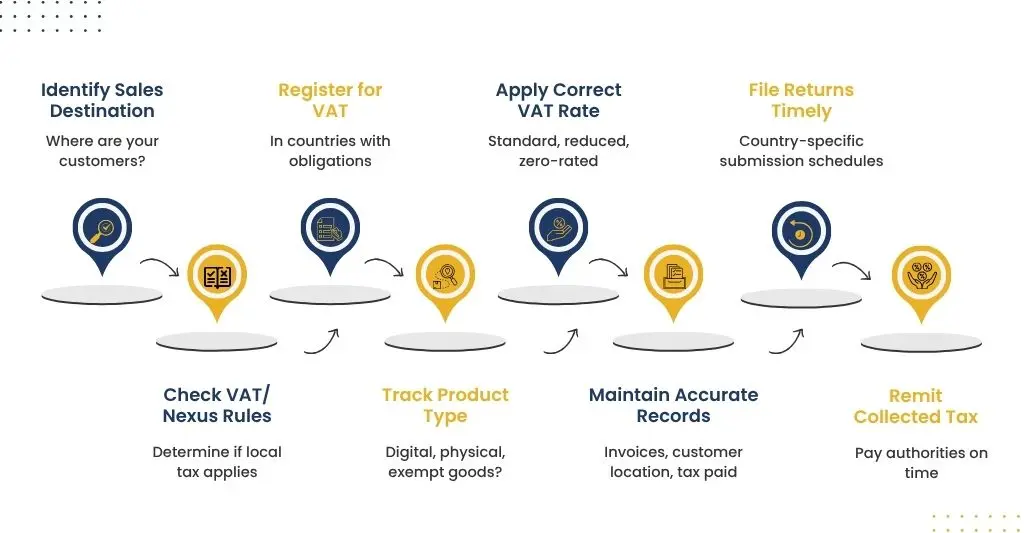
Simplifying Cross-Border Sales Tax
Due to different tax rules in other countries, simplifying cross-border sales tax might be difficult. However, here is a methodical way eCommerce tax accountants use to make it easier for UK businesses:
- Analyse Your Tax Obligations
- Your accountant identifies where VAT or sales tax applies, both in the UK and internationally.
- They determine if you have physical or economic nexus in other countries, such as EU VAT thresholds under the OSS scheme.
- Register and Maintain Compliance
- Your accountant ensures proper VAT registration in every relevant jurisdiction.
- They handle any local representation requirements and keep your registrations up-to-date.
- Automate Tax Collection and Reporting
- Collecting the correct tax rate on each sale can be complex. Therefore, your accountant uses HMRC-compliant systems or software like Avalara, Quaderno, or Xero to automate VAT calculation and reporting, ensuring nothing is missed.
Important Update: From April 2026, UK businesses will need to report Income Tax using MTD-compliant systems. Your eCommerce tax accountant can help you stay ready and compliant. [To know more, read our MTD for Income Tax guide].
- Maintain Accurate Records
- Proper documentation is critical for audits.
- An eCommerce tax accountant ensures invoices, exemptions, and cross-border transaction records are accurate and retained per HMRC’s six-year requirement.
- Monitor Changes in Tax Laws: The tax code is always evolving. Your accountant stays updated with HMRC and international VAT changes, adapting your processes so your business remains compliant.
Choose E2E eCommerce Tax Accountants for Your Business
Choosing an end-to-end (E2E) eCommerce tax accountant is crucial for modern online businesses managing the complexities of international transactions. These experts provide all-inclusive tax solutions and compliance checklist that are customised to meet the particular requirements of online retailers, handling everything from determining tax liabilities in various jurisdictions to registering, collecting, and sending sales tax or VAT.
E2E eCommerce tax accountants use sophisticated automated techniques and extensive industry knowledge to simplify compliance, lower audit risk, and free up critical time so business owners can concentrate on expansion. Whether you’re growing internationally or selling on sites like Shopify, Amazon, or WooCommerce, working with the best E2E eCommerce tax accountant guarantees accuracy, scalability, and peace of mind.
Get Tailored Tax Support That Grows with Your eCommerce Business. Book a Meeting Today and and Start Maximising Your Savings!
Can an eCommerce accountant help with international sales tax?
Yes. They can assist with VAT in the EU, OSS/IOSS schemes, and sales tax registration in the US, ensuring you’re compliant with cross-border tax laws.
What tax deductions are available for eCommerce businesses in the UK?
You can claim deductions for business expenses like software, fulfilment costs, advertising, packaging, professional fees, and platform commissions, provided they are wholly and exclusively for business use.
Is eCommerce VAT different from regular VAT?
Yes. eCommerce VAT often involves multiple jurisdictions, marketplace facilitator rules (e.g. Amazon collecting VAT), and digital product rules, which can be more complex than standard domestic VAT.
What makes E2E a good fit for eCommerce businesses?
E2E specialises in platform-specific tax planning, cross-border VAT, and real-time digital reporting. We integrate with Amazon, Shopify, Xero, and more — ensuring you save time and stay compliant.
Can I handle eCommerce taxes myself?
While possible for very small businesses, the complexity of multi-channel sales and cross-border transactions makes professional guidance advisable.
What is the VAT threshold for eCommerce businesses in the UK?
Currently, UK VAT registration is required if annual taxable turnover exceeds £85,000.
